जमाअत-ए-इस्लामी हिंद के मर्कज़ी तालीमी बोर्ड (MTB) ने इलाहाबाद हाई कोर्ट (लखनऊ बेंच) के फैसले का स्वागत किया
Markazi Taleemi Board, Jamaat-e-Islami Hind Welcomes Allahabad High Court's Decision regarding unrecognized Madrasas in UP.


 Aina India News
जमाअत के मर्कज़ी तालीमी बोर्ड ने इलाहाबाद हाई कोर्ट के फैसले का स्वागत किया
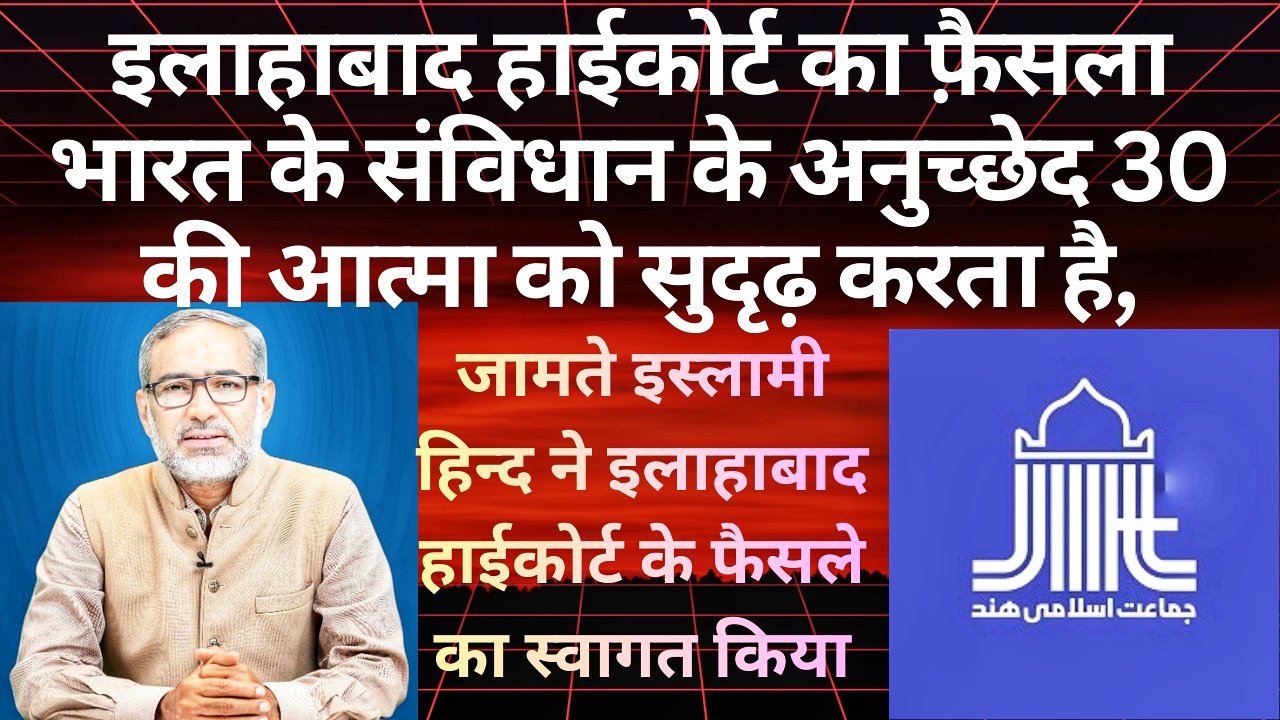
इलाहाबाद हाईकोर्ट का फ़ैसला भारत के संविधान के अनुच्छेद 30 की आत्मा को सुदृढ़ करता है, जो धार्मिक और भाषाई अल्पसंख्यक को अपनी शैक्षिक संस्था स्थापित करने और प्रबंधन का अधिकार देता है। उन्होंने देश भर के मदरसों के व्यवस्थापकों को भी अपनी शुभकामनाएं दीं।
नई दिल्ली, 21 जनवरी, 2026 – जमाअत-ए-इस्लामी हिंद के मर्कज़ी तालीमी बोर्ड (MTB) ने इलाहाबाद हाई कोर्ट (लखनऊ बेंच) के 16 जनवरी, 2026 के हालिया फैसले का स्वागत किया जिसमें अल्पसंख्यक शैक्षणिक संस्थान के संवैधानिक अधिकारों को बरकरार रखा गया है। साथ ही उत्तर प्रदेश में गैर-मान्यता प्राप्त मदरसों के काम करने के बारे में कानूनी स्थिति को को भी स्पष्ट कर गया।
फ़ैसले के प्रसंग से जमाअत-ए-इस्लामी हिंद के मर्कज़ी तालीमी बोर्ड के सेक्रेटरी सैयद तनवीर अहमद ने कहा कि हाई कोर्ट के इस फ़ैसले का अल्पसंख्यक शिक्षा पर दूरगामी असर होगा। उन्होंने कहा कि यह फ़ैसला भारत के संविधान के अनुच्छेद 30 की आत्मा को सुदृढ़ करता है, जो धार्मिक और भाषाई अल्पसंख्यक को अपनी शैक्षिक संस्था स्थापित करने और प्रबंधन का अधिकार देता है। उन्होंने देश भर के मदरसों के व्यवस्थापकों को भी अपनी शुभकामनाएं दीं।
सम्बन्धित खबरों के लिए नीचे दिए गये लिंक पर क्लिक करें।👉🏽http://www.mpnn.in
माननीय अदालत ने एक ऐसे सरकारी आदेश को रद्द कर दिया है जिसमें एक गैर-मान्यता प्राप्त मदरसे को बंद करने और सील करने का आदेश दिया गया था। अदालत ने साफ़ किया कि ऐसा कोई कानूनी नियम नहीं है जो संबंधित अधिकारियों को सिर्फ़ मंज़ूरी न मिलने के आधार पर मदरसे को बंद करने का अधिकार देता हो। कोर्ट ने साफ़ तौर पर कहा कि जो अल्पसंख्यक शैक्षणिक संस्थान सरकारी मदद या औपचारिकताओं को पूरी नहीं करते हैं, वे संविधान के आर्टिकल 30(1) के तहत सुरक्षा के हकदार हैं।
हालांकि, अदालत ने यह भी साफ़ किया कि गैर-मान्यता प्राप्त संस्था सरकारी अनुदान के हकदार नहीं हैं और ऐसी संस्था में पढ़ने वाले छात्र बोर्ड एग्जाम या दूसरी सरकारी सुविधाओं के लिए तब तक योग्य नहीं होंगे जब तक संस्था को औपचारिक अनुमोदन नहीं मिल जाता।
यह फ़ैसला संवैधानिक सुरक्षा उपायों और नियामक ज़रूरतों के बीच संतुलित दृष्टिकोण पेश करता है। अदालत ने इस बात पर ज़ोर दिया कि किसी शैक्षणिक संस्थान को बंद करने जैसे प्रशासनिक कार्रवाई को स्पष्ट कानूनी अधिकार के बिना सही नहीं ठहराया जा सकता, साथ ही मान्यता प्राप्त संस्था के स्तर को बनाए रखने में राज्य के हितों को भी स्वीकार किया गया है।
———————/——————————–

AIN/Desk News
New Delhi, January 21, 2026 – The Markazi Taleemi Board (MTB), Jamaat-e-Islami Hind has welcomed the recent decision of the Allahabad High Court (Lucknow Bench) delivered on January 16, 2026, which affirmed the constitutional rights of minority educational institutions and clarified the legal situation regarding the functioning of unapproved (unrecognized) madrasas in Uttar Pradesh.
Commenting on this decision, Mr. Syed Tanveer Ahmed, Secretary, MTB, Jamaat-e-Islami Hind said that this High Court decision has far-reaching and long-term implications for minority education. He said that this decision strengthens the spirit of Article 30 of the Indian Constitution, which gives religious and linguistic minorities the right to establish and manage their own educational institutions. He also expressed good wishes for madrasa administrators across the country.
For other news, please click on the link below.👇🏽👇🏽👇🏽👇🏽👇🏽👇🏽
The honorable court struck down a government order that had directed the closure and sealing of an unapproved madrasa. The court clarified that there is no legal provision that gives relevant authorities the power to close a madrasa merely on the basis of non-approval. The court stated categorically that minority educational institutions that do not seek government aid or formal approval are entitled to protection under Article 30(1) of the Constitution.
However, the court also clarified that unapproved institutions are not entitled to government grants, and students studying in such institutions cannot be eligible for board examinations or other government facilities until the institution obtains formal approval.
This decision presents a balanced perspective between constitutional protections and regulatory requirements. The court emphasized that an administrative action such as closing any educational institution cannot be justified without clear legal authority, while also recognizing the state’s legitimate interest in maintaining standards for recognized institutions.
According to the Markazi Taleemi Board, this decision is an important affirmation of constitutional supremacy and provides much-needed clarity amid ongoing debates concerning minority rights and educational administration. This decision once again highlights the fact that the judiciary plays a key role in protecting the constitutional rights of minority communities while ensuring compliance with the legal framework.













No Comments: